

It’s St. Patrick’s Day, and as much as I’d love to blame the recent flood of bad outbound I’ve encountered on bad luck or a bad pint...
I simply can’t.
The real issue is, unfortunately, much less charming: too many business development teams have forgotten what initial outreach is actually for. A weak signal shows up somewhere – a website visit, a content download, a title match, a scrap of “intent” data – and suddenly that becomes justification for an immediate pitch, no questions, cut to… meeting request.
That’s the mistake.
Intent is not permission. It’s not permission to skip the work. It’s not permission to lead with your company overview. And it’s definitely not permission to ask for my time before giving me a reason to care.
At best, those things are prompts. Clues. Reasons to look closer. They are not a license to skip straight to the ask.
And yet that is exactly what a lot of outbound teams do.
They mistake intent “noise” for understanding “signal”. They see a little digital movement, assume it means “buyer ready,” and fire off some version of: “Here’s who we are, here’s what we do, want to meet?”
That is not business development. That is just modern day dialing-for-dollars.
And the frustrating part is that most leaders know better.
If you ask them in theory, they’ll say the right things. They’ll tell you outreach should be relevant. They’ll tell you reps should do research. They’ll say the first touch should create value, not just ask for time. They’ve read about The Challenger Sale. They’ve sat through the workshops. They know that strong outreach is supposed to teach, tailor, and create a reason to engage.
But when the pressure shows up, a lot of organizations drift right back to the hard-pitch model.
Why? Because the numbers read cleaner.
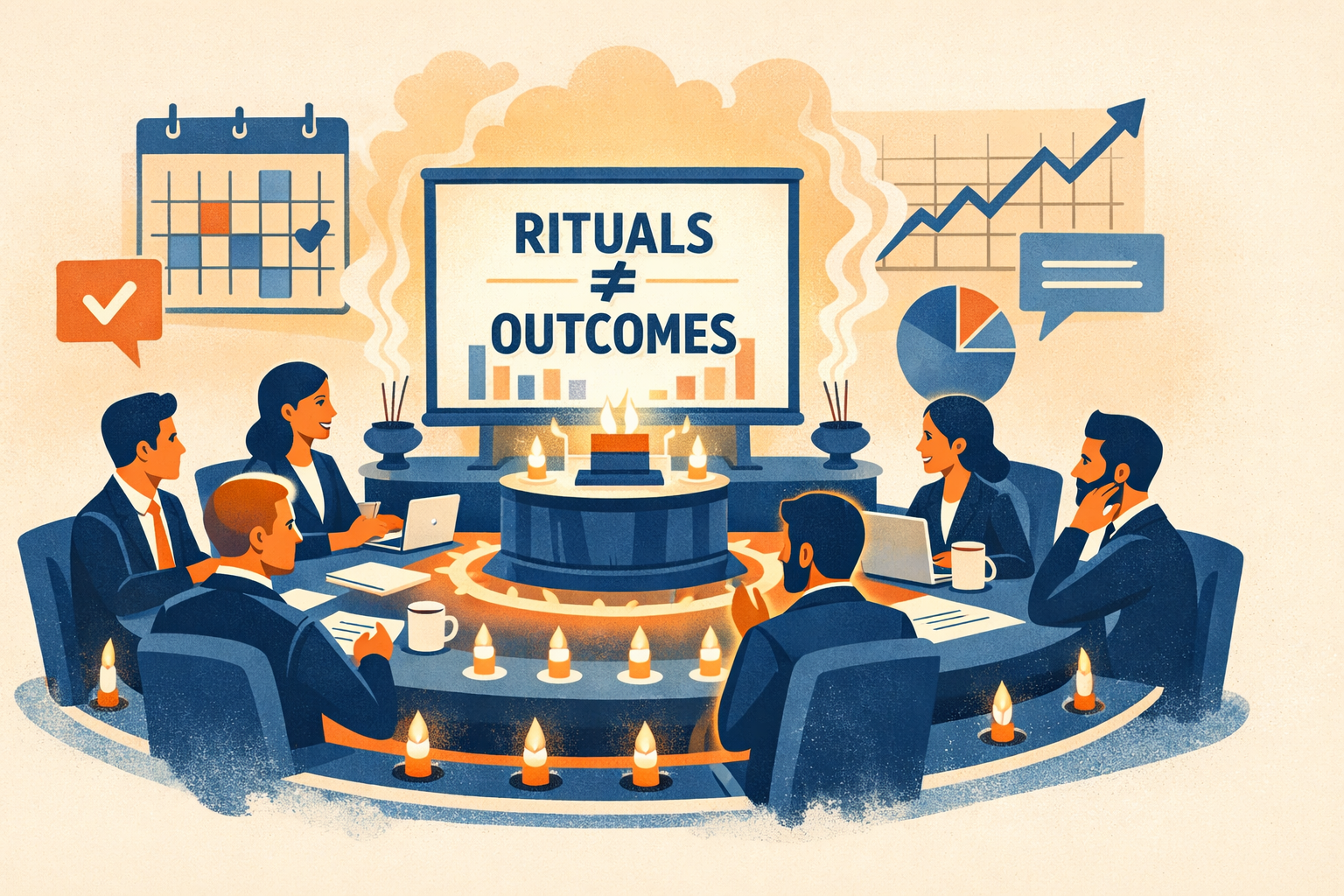
It’s a lot simpler to explain call volume than message quality. Much easier to track emails sent than relevance created. More quantifiable to show meetings booked than to prove a rep brought a sharp point of view to the market. Activity dashboards are neat. “Dials, connects, meetings” fits on one slide. It gives everyone something to point at. Call it Activity Theater.
Quality is significantly messier.
Relevance is harder to count.
Judgment is harder to standardize.
Good hypotheses don’t always fit neatly into a dashboard.
So even leaders who start with the right philosophy often revert to the wrong operating model, because it is simpler to manage, simpler to report, and simpler to defend.
(Cue Admiral Ackbar:) It’s a trap!

The hard-pitch version of outbound looks efficient inside the self-congratulatory company long before it looks useful to the real buyer. The spreadsheet says the machine is moving, and so often that's what earns bonuses. Meanwhile, the buyer (aka the person actually spending money) experiences it as noise.
And buyers know noise when they see it. Years of being hounded by sales reps has honed their radar.
This is where Challenger still has something important to teach. The idea was never “be more aggressive.” It was never “ask for the meeting faster.” The power of Challenger was in the idea that great sellers teach, tailor, and take control. They bring a perspective. They connect it to the customer’s world. They create constructive tension around the status quo. In other words, they earn the conversation by making it worth having in the first place.
That is the actual job of initial outreach.
Not to explain your company. Not to sneak in a mini-demo. Not to unload a pitch deck in paragraph form.
The job of first outreach is to create informed curiosity.
A good first message should do at least one of these things:
-
It should show that you understand a problem the buyer may have.
-
It should connect a signal to a plausible business issue.
-
It should offer a useful lens, observation, or hypothesis.
-
It should make the buyer think, “Okay, this person might actually have something interesting to say.”
Notice what is missing from that list: your boilerplate company description.
That’s where so much outreach goes sideways. It is written from the seller’s point of view. “We help companies like yours…” “We’re a leading provider of…” “We’d love to show you how…” Fine. Great. I love that for you. But none of that answers the buyer’s first question, which is the only one that matters:
Why should I care right now?
If the first touch cannot answer that, it has not earned the ask.
And no, this does not mean every outbound message needs to be a handcrafted piece of literature. Nobody is asking for poetry. But there does need to be evidence of thought. Evidence that the sender has moved beyond “this person fits the ICP” and into “there is a specific reason this conversation may matter now.”
That reason could be a market shift. A hiring pattern. A systems change. A go-to-market inflection point. A sign of operational strain. A common issue companies at that stage tend to run into.
Whatever it is, it should be real enough that the buyer can feel the difference.
The message should not say, “I am contacting you because you exist.”
It should say, “I am contacting you because there is a pattern here worth discussing.”
That is what real business development looks like.
It is not just motion. It is interpretation. It is not just persistence. It is judgment. It is not just asking for time. It is offering a reason.
That is also why so much “personalized” outreach still feels lazy. Swapping in a company name, job title, or recent LinkedIn post is not relevance. It is decoration. Real personalization is not cosmetic. It is situational. It shows that you understand something about the buyer’s world that changes the meaning of your message.
That kind of outreach is harder to produce. It asks more of the rep. It asks more of the manager, too. You have to coach thinking, not just activity. You have to inspect the quality of the premise, not just whether the sequence went out on time. You have to reward people for making the message more meaningful, not just more frequent.
That takes more work than cranking out calls.
It also works better.
So here’s the remedial lesson for business development teams:
Stop teaching reps that the goal of initial outreach is to get the meeting. That’s too crude to be useful.
Rather:
Teach them that the goal is to make the meeting make sense.
Teach them to build a hypothesis before they build a sequence.
Teach them that intent signals are clues, not conclusions.
Teach them that the first touch should create value before it requests time.
Teach them that a meeting ask without a reason is just a polite (and sometimes not so polite) demand.
And teach leaders something too: A metric that is easy to explain does not make it the right one to run your team around.
Because this is the quiet truth underneath a lot of bad outreach. It is not always driven by ignorance. Sometimes it is driven by convenience. The hard-pitch model survives because it is operationally tidy, even when it is commercially dumb.
But, trust me when I say: The buyer feels that tradeoff immediately.
So if you’re tired of sending garbage into the market, try these two things:
First, ban the naked meeting ask in first-touch outreach.
If the message has not shown a relevant problem, hypothesis, or point of view, it has not earned the request. No more “worth a quick chat?” hanging off the end of a company pitch. The first touch should create enough relevance that a next step feels logical, not extracted.
Second, require every outbound message to answer one question: why this buyer, why now?
Not “why our company.” Not “why our product.” Why this person, at this company, in this moment? If the rep cannot answer that clearly, they are not ready to send the message. They may have a signal, but they do not yet have a reason, and that’s okay.
That’s it. Not revolutionary. Not complicated. Just disciplined.
Because the problem with bad outbound is usually not that teams lack tools, data, or sequencing software. It’s that they mistake motion for meaning. They see activity and assume progress. They see intent and assume permission.
But buyers know the difference.
And the teams that stand out will be the ones that remember a basic truth: the first touch is not there to force a conversation. It is there to make one worth having.